
From Ukraine to the UN: Salvation Army Insights Inform Global Human Rights Review
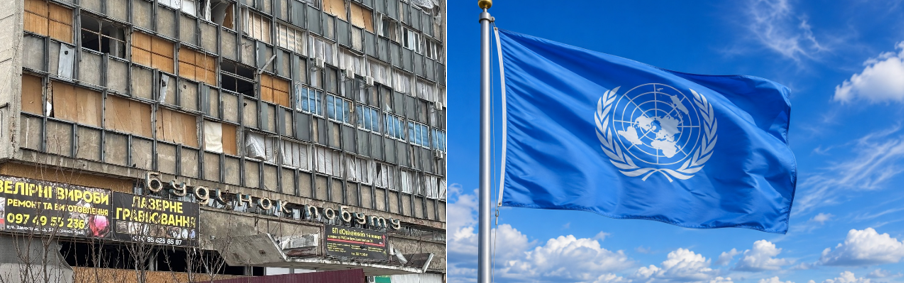
Drawing on years of service alongside displaced families, The Salvation Army's experience in Ukraine is helping bring the realities of war, poverty, and displacement before the United Nations.
For more than four years, The Salvation Army has stood alongside families whose lives have been upended by the war in Ukraine. Through food assistance, educational support, mental health programs, community services, and aid for displaced families, Salvation Army personnel have witnessed firsthand the challenges facing some of the country's most vulnerable people. Today, those experiences are helping inform discussions at one of the world's most influential international forums: the United Nations
The Salvation Army's International Social Justice Commission (ISJC) recently submitted a report to the United Nations Human Rights Council's Universal Periodic Review (UPR), a process through which every UN member state undergoes a review of its human rights record. Alongside submissions from governments and international organizations, civil society groups are invited to contribute evidence and perspectives that help ensure the lived experiences of ordinary people are represented in global discussions.
The report on Ukraine focuses on the experiences of internally displaced people, many of whom continue to face significant barriers in accessing healthcare, education, and social protection despite legal safeguards designed to protect them. Older adults, people living with disabilities, and families caring for children often face the greatest challenges. The report also highlights the continuing impact of the war on children's education and well-being, including ongoing disruptions caused by conflict and displacement.
While the report was submitted through the ISJC, its findings reflect realities The Salvation Army has encountered throughout its extensive work in Ukraine and neighboring countries since the conflict began. Across Ukraine, millions remain displaced, families continue to struggle with rising living costs, and children are growing up amid prolonged uncertainty and disruption. These are challenges that Salvation Army corps officers, staff, and volunteers encounter every day as they serve their communities.
The Salvation Army World Service Office (SAWSO) has played an important role in supporting these efforts. Through partnership with The Salvation Army's Eastern Europe Territory, SAWSO has helped sustain programs that provide practical assistance and long-term support for families navigating the realities of life during wartime. Current initiatives include food voucher programs that allow families to purchase essential goods, after-school programs that provide children with safe spaces, meals, and emotional support, and services designed to assist displaced households as they rebuild stability.
Learn More About The Salvation Army’s Work in Ukraine
The scale of the need remains significant. Millions of Ukrainians remain displaced, while many households continue to face economic hardship, limited access to services, and ongoing uncertainty about the future. At the same time, many humanitarian organizations have reduced operations as international funding declines, increasing the importance of trusted local networks that can remain embedded in the communities they serve. The Salvation Army has continued to maintain that presence, providing consistent support long after global headlines have moved elsewhere.
The submission to the United Nations represents another dimension of that commitment. Beyond meeting immediate needs, The Salvation Army is helping ensure that the voices of vulnerable people are heard by decision-makers responsible for shaping national and international responses. By bringing evidence from communities affected by conflict directly into international discussions, the organization helps connect local realities with global action.
For SAWSO, the report underscores the importance of supporting work that extends beyond humanitarian assistance alone. It reflects a broader commitment to dignity, justice, and advocacy for people whose experiences might otherwise go unheard. It also demonstrates how insights gathered through local ministry and community programs can contribute to conversations taking place on the world stage.
As Ukraine prepares for its next review before the United Nations Human Rights Council, The Salvation Army's message is clear: the challenges facing displaced families, children, older adults, and people with disabilities must not be overlooked. Through both practical service and international advocacy, The Salvation Army remains committed to standing alongside those affected by conflict and helping ensure their experiences help shape the solutions of tomorrow.
Key Facts from the Report
The Salvation Army's Presence in Ukraine
- The Salvation Army has served communities in Ukraine since 1994 and now operates in eight locations across the country.
Evidence Submitted to the United Nations
- The report draws on data collected from 3,823 conflict-affected individuals participating in Salvation Army-supported programs.
- Findings were gathered through surveys, interviews, and beneficiary feedback across multiple humanitarian initiatives.
Poverty and Economic Hardship
- 91% of survey respondents reported household incomes below the World Bank poverty line.
- 98% said they were unable to fully meet their household's basic needs.
- Many families reported borrowing money, reducing food consumption, delaying rent payments, or relying on relatives and friends for support.
Children and Education
- The Salvation Army's After School Project supported 323 children in 2025 and indirectly benefited 601 parents and caregivers.
- According to UNICEF, children in frontline areas have spent between 3,000 and 5,000 hours in shelters during air raid alerts since the conflict began.
- Salvation Army after-school programs provide educational support, psychosocial care, and safe spaces equipped with bomb shelters.
Health and Vulnerable Populations
- 42% of survey respondents were age 60 or older.
- 54% of households included someone experiencing mobility, vision, hearing, memory, or other functional limitations.
- Older adults and people with disabilities continue to face significant barriers to healthcare access.
Why It Matters
- The Salvation Army's findings were submitted to the United Nations Human Rights Council's Universal Periodic Review, helping ensure the experiences of internally displaced and conflict-affected Ukrainians are reflected in international human rights discussions.
DONATE TODAY to help families in Ukraine