The Salvation Army Activates Early Prevention Measures to Support Communities in Eastern DRC

May 21, 2026

Beautiful sunset over the ocean
This image depicts Centers of Disease Control and Prevention (CDC)-supported Ebola screening, being conducted at the Rubavu District Poids Lourde (Petite Barrier) Border Crossing, between Rwanda and the Democratic Republic of Congo (DRC), on October 29, 2018.
Photo by CDC / CDC Connects

Donate Now

Update: June 5, 2026 

Why Faith-Based Organizations Are Critical to the Ebola Response in the Democratic Republic of Congo

As the Democratic Republic of Congo (DRC) confronts a new Ebola outbreak, the global response faces a familiar challenge: how to reach communities quickly with accurate information and lifesaving care, in a context shaped by conflict, displacement, and deep-rooted mistrust.

With no vaccine or treatment available, prevention is critical to stopping the spread. At its core, this is about trust as much as medicine.

Recent analysis from frontline experts underscores a key reality. In the absence of widely available vaccines or treatments, containing Ebola depends on how quickly health workers can identify cases, isolate infections, and engage communities with credible, trusted information.

In this environment, faith-based organizations play a decisive, frontline role.

A Network That Already Exists

The Salvation Army has operated in the DRC for more than 90 years, building a nationwide presence rooted in local communities. Today, that includes:

  • 496 schools
  • 29 health centers
  • 319 corps and outposts, alongside community and care facilities

This network is long established, locally led, and embedded in the communities it serves. As a result of decades of consistent presence, The Salvation Army and its staff are widely known and trusted. The Salvation Army’s officers, teachers, and health workers are seen as insiders, who are part of everyday community life, known by name, working in familiar places, and present long before the current crisis began, and long after crises end.

Why Trust Determines Whether Outbreaks Are Contained

The importance of this local presence is well documented. Ebola response efforts in the DRC have repeatedly been undermined by mistrust of external organizations.

During the 2018–2020 outbreak, more than 450 incidents of violence or threats against health workers were recorded, driven in part by distrust of outside-led interventions and top-down communication approaches. Research and field reporting show that communities often resisted interventions when they felt excluded, misunderstood, or disconnected from decision-making.

At the same time, faith leaders and local organizations played a critical role in bridging this gap. They helped counter misinformation, explain public health measures, and restore confidence in the response.

Current expert guidance emphasizes that community trust, local leadership, and long-term presence remain essential to an effective Ebola response.

Trusted People Deliver Trusted Information

One of the most consistent lessons from previous Ebola outbreaks is that messages are only effective when they come from trusted sources. During the 2018–2020 crisis:

  • Faith leaders and teachers were trained to deliver Ebola prevention messages
  • These trusted community figures reached hundreds of thousands of people with accurate information
  • Their involvement helped reduce stigma and improve community acceptance

This is critical in a disease outbreak where misinformation can spread as quickly as the virus itself.

Faith-based organizations operate within existing social structures. Their leaders are already part of daily life, including worship, education, and community decision-making. As a result, they can communicate in ways that are culturally relevant and credible.

The Role of Local Institutions in Access and Acceptance

Ebola does not spread through casual contact. It spreads through direct interaction with infected individuals or contaminated surfaces. That makes early detection and behavior change essential. But both depend on access and acceptance. Faith-based organizations help address both:

  • Access: Schools, clinics, and corps buildings serve as established points for outreach, training, and service delivery
  • Acceptance: Communities are more likely to engage with services provided by institutions they already trust

This is especially important in regions affected by conflict, where mobility is limited and external actors may face barriers to entry.

The Salvation Army’s Role in Previous Ebola Responses

The Salvation Army’s work during prior outbreaks demonstrates the practical impact of this model. In North Kivu, the organization worked with:

  • 10 health centers
  • 320 schools
  • 120 faith-based institutions

to deliver hygiene training and prevention messaging.

Local leaders were trained and then equipped to train others, creating a multiplier effect that extended far beyond the initial intervention. The organization also supported:

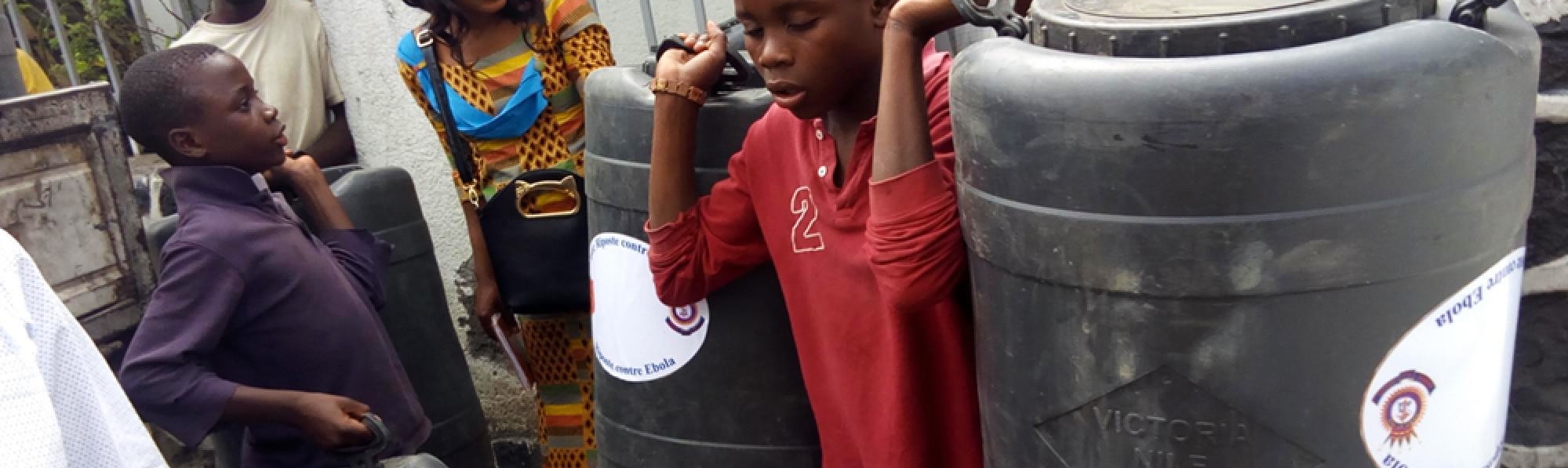
  • Installation of handwashing infrastructure in schools and community locations
  • Provision of protective equipment for clinics
  • Community-level education programs to reduce stigma and misinformation

This approach leveraged existing relationships rather than attempting to build new ones during the crisis.

Faith-Based Organizations in Today’s Response

The current outbreak presents similar challenges to those seen in previous crises:

  • Fragile health systems
  • Ongoing conflict and insecurity
  • Population movement across regions
  • Limited treatment options

In this context, organizations with deep local roots are uniquely positioned to act quickly and effectively. Faith-based organizations provide:

  • Continuity: They remain in place before, during, and after crises
  • Credibility: Their long-standing presence builds trust over time
  • Reach: Their networks extend into remote and underserved areas
  • Inclusivity: They serve all people, regardless of background or status

The Salvation Army’s approach reflects this. Its officers and staff are part of the communities they serve, known for welcoming all.

A Critical Component of an Effective Response

Ebola outbreaks cannot be contained through clinical interventions alone. They require:

  • Community engagement
  • Behavior change
  • Trust in public health guidance
  • Local leadership

Faith-based organizations are essential to each of these elements. As global health partners mobilize resources and technical expertise, the role of embedded, trusted organizations on the ground remains indispensable. In the DRC, that includes a network of faith-based organizations, including The Salvation Army, built over decades that continue to serve as a foundation for response, resilience, and recovery. The DRC government is also working closely with the faith community to support risk communication and community engagement to combat the current outbreak.

Update: June 1, 2026 

Salvation Army Ebola Response Expands in Ituri and Across Democratic Republic of the Congo  

The Salvation Army’s response to the Ebola crisis is continuing to scale in eastern Democratic Republic of the Congo, with activity now centered in Bunia, Ituri province, one of the outbreak’s epicenters. 

In Bunia, The Salvation Army is actively participating in coordination meetings led by the United Nations Office for the Coordination of Humanitarian Affairs (OCHA), contributing to local response planning alongside government and humanitarian partners. The corps is also mobilizing community volunteers to support outreach and assistance to affected populations. 

Two emergency projects are now moving forward: 

  • Community-based prevention and awareness efforts targeting households in villages around Bunia, focused on Ebola symptoms, transmission, alert systems, and hygiene practices, alongside the distribution of sanitation materials. 
  • Support to frontline health workers in North and South Kivu, including the provision of personal protective equipment (PPE), where partners report that existing supplies remain insufficient to meet demand. 

The Salvation Army’s medical leadership is also directly engaged in Ministry of Health planning efforts, ensuring alignment with government-led response strategies. In Kinshasa, The Salvation Army Territorial Headquarters is convening faith-based networks in partnership with the Ministry of Health to strengthen risk communication and community engagement. This includes addressing misinformation, building trust, and promoting critical prevention behaviors such as handwashing, patient isolation, and safe, dignified burials, particularly important in communities where confidence in public authorities remains low. 


Working with health authorities and partners, The Salvation Army is advancing prevention, hygiene, and community-based response efforts to reduce the risk of Ebola transmission. 

The Salvation Army is working in coordination with national health authorities and international partners to support early response efforts in eastern Democratic Republic of Congo (DRC).

Drawing on experience from previous outbreak responses, teams are focused on prevention, community engagement, and strengthening frontline capacity to reduce the risk of transmission and protect vulnerable populations.

Coordinated Response and Local Capacity

The Salvation Army is part of ongoing coordination efforts with the DRC Ministry of Health and other partners, supporting a unified and locally led response. Through its established presence across the country—including health facilities, schools, and community centers—the organization is positioned to contribute to prevention and response activities.

This network enables work with trusted community leaders, including officers, teachers, and local personnel, to share accurate information and support community-level engagement.

Prevention and Hygiene Interventions

Early actions are focused on reducing transmission risk through proven public health measures, including:

  • Activation of hygiene protocols across Salvation Army facilities
  • Expansion of water, sanitation, and hygiene (WASH) interventions
  • Preparation for distribution of personal protective equipment (PPE), handwashing materials, and infection prevention supplies

These measures are informed by established public health approaches and prior outbreak responses.

Supporting Frontline Workers and Communities

As response efforts are prepared to scale, if needed, The Salvation Army is taking steps to support:

  • Healthcare and community workers with protective equipment and supplies
  • Continued access to safe hygiene and sanitation resources
  • Community-based efforts that help individuals understand and reduce risk

Work is also underway to strengthen infection prevention measures across Salvation Army-supported locations to ensure services can continue safely.

Community Engagement and Risk Communication

A key focus of the response is working through trusted local networks to support community understanding and participation.

This includes:

  • Training community members and personnel in awareness and prevention practices
  • Supporting communication efforts that are clear, accurate, and locally relevant
  • Engaging leaders in culturally sensitive areas—including care practices and burial traditions—to help reduce risk while respecting local context

These efforts help families continue daily life while reducing fear and preventing further spread.

Building on Experience

The Salvation Army’s team in the DRC has prior experience responding to Ebola outbreaks, including the 2018–2020 response. This experience is informing current planning and early action.

Efforts are being developed across two areas:

  • Rapid response support, including immediate supply and prevention measures
  • Strengthening health systems, with a focus on improving long-term preparedness and infection control

Updates will be shared as more information becomes available through verified partner and public health sources.